
Vertigo is a first-person surreal, atmospheric exploration prototype in Unreal Engine 5, built around a gravity-flipping traversal mechanic. The experience is mostly linear, using brutalist architecture, scale, fog/lighting, and sound to create an eerie mood and make the player feel disoriented inside the space.
The project started as a personal goal to learn UE5 and practice level design by building a walking-simulator style environment focused on mood and player experience. Later, gravity flipping became the core idea, so I shaped the level around it and added light gameplay beats during exploration (simple obstacles, a few puzzle-like moments, and clear flip platforms with visual cues).
Built solo, I owned the full experience: environment blockouts, level flow, and the gravity-flip mechanic, making sure the spaces supported exploration, readability, and the intended mood.
Key work
Core Mechanic (Gravity Flip):
Designed and implemented the gravity-flipping traversal that lets the player re-orient and experience the same space from a new perspective.Level Design & Pacing:
Built a mostly linear exploration route focused on scale, disorientation, and a steady “deeper you go, stranger it gets” progression.Atmosphere (Lighting, Fog, Sound):
Created the surreal mood through brutalist/liminal spaces, lighting and fog shaping, and sound choices that support tension and orientation.Unreal Engine 5 Learning & Prototyping:
Made the full prototype in UE5 in 5 weeks as my first UE5 project, focusing on fast iteration and a portfolio-ready showcase.
Project Origin
I wanted to get better in Unreal Engine 5 by building a full, eerie environment.
I was inspired by games like NaissanceE, where the space itself creates tension and curiosity.At first, Vertigo was not about “making puzzles.”
It was about creating a place that feels strange, quiet, and unsettling, a space you want to move through slowly, while trying to understand what you’re looking at.
While building the first spaces, I started thinking:What if movement inside the level is the main challenge?
Not enemies. Not UI. Just the player, the space, and a rule that changes how you navigate.That’s when the core mechanic idea appeared.
Once I saw how strong the mechanic felt inside this kind of architecture, Vertigo shifted from “environment practice” into a mechanic-driven level design project.My early brainstorming came from architectural concepts and spaces that feel built around control and observation, not comfort.
The next section shows that process step-by-step, using early sketches, first blockouts the first playable layout!
Level Design
How I Start (Research / Approach)
For Vertigo, I started the same way I usually do: from architecture.I wanted the space to feel brutalist, heavy, and a bit unsettling. I always find it fascinating how much emotion you can create only with shapes, scale, and composition — without characters, dialogue, or story.
So my “research” is mostly visual:•I collect references (real brutalist buildings + game mood references)•I look for strong silhouettes, deep shadows, long corridors, and big empty space•Then I try to recreate that feeling using very simple blocks firstThis is also how I worked in Project Echo. I like using architecture as the foundation, and then building gameplay on top of it.
Level Flow Overview
Here is the level flow map of the rooms and how the player moves through the facility. It shows the full route from the first office space to the later areas and reveals.

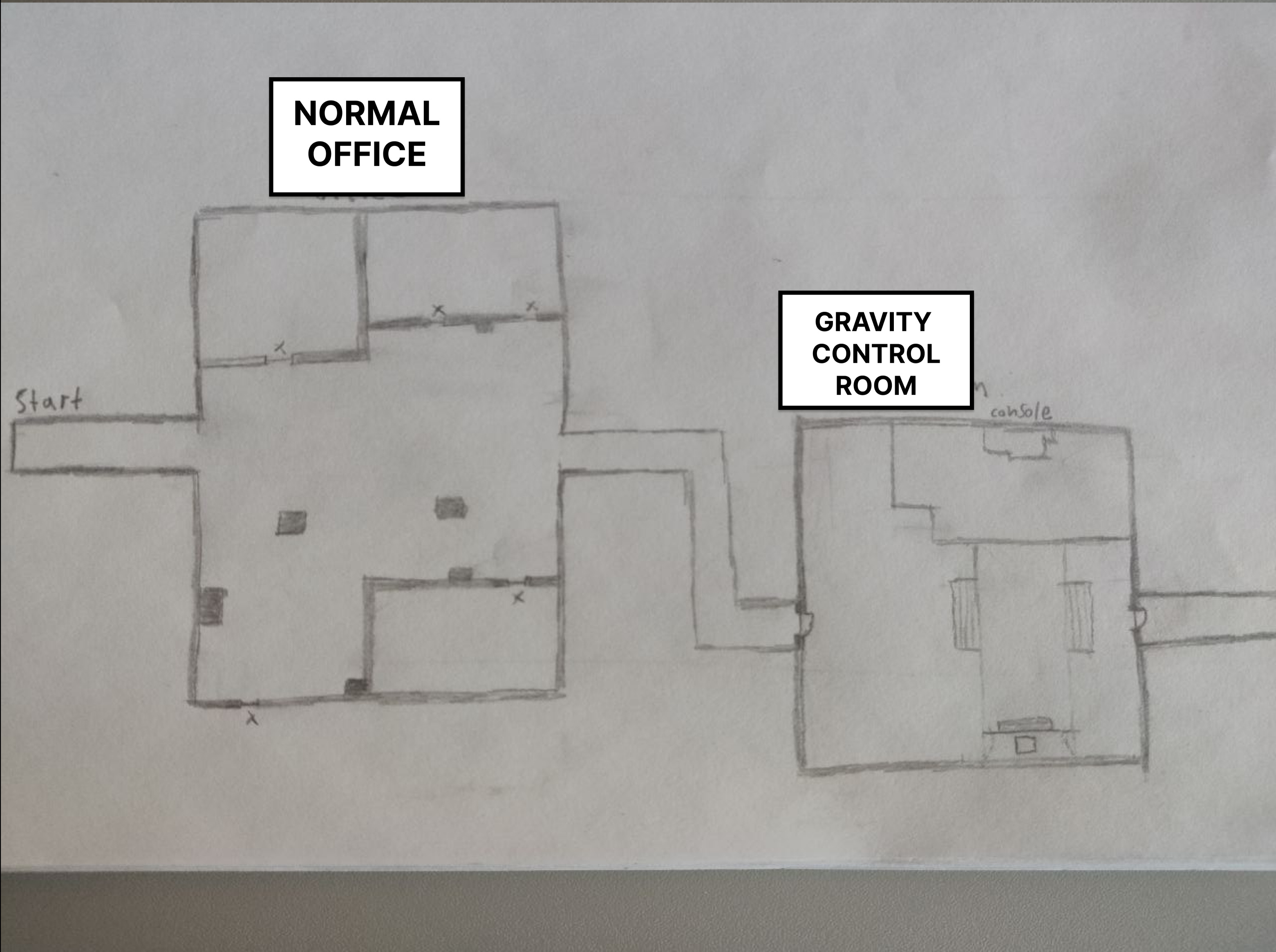
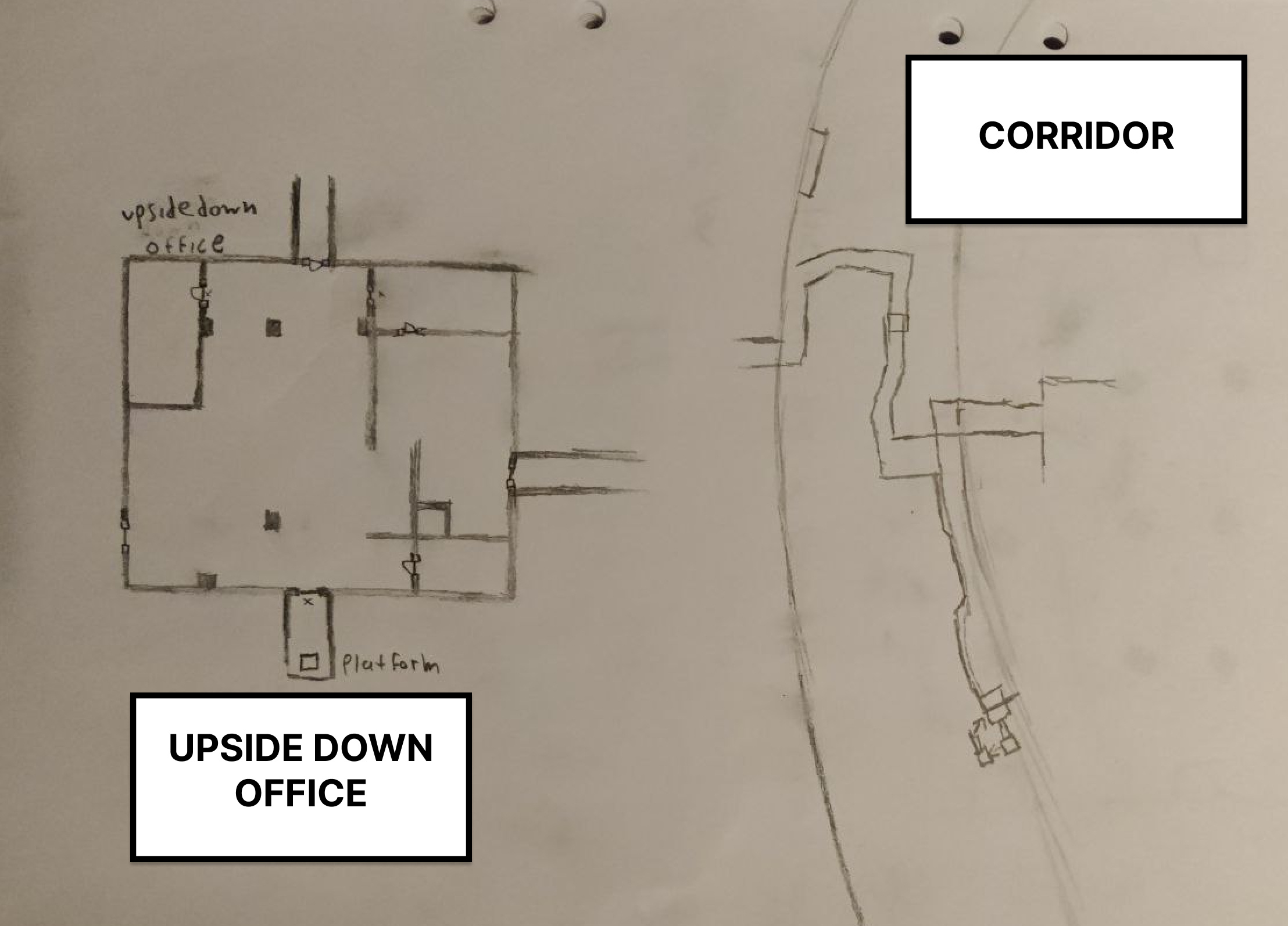
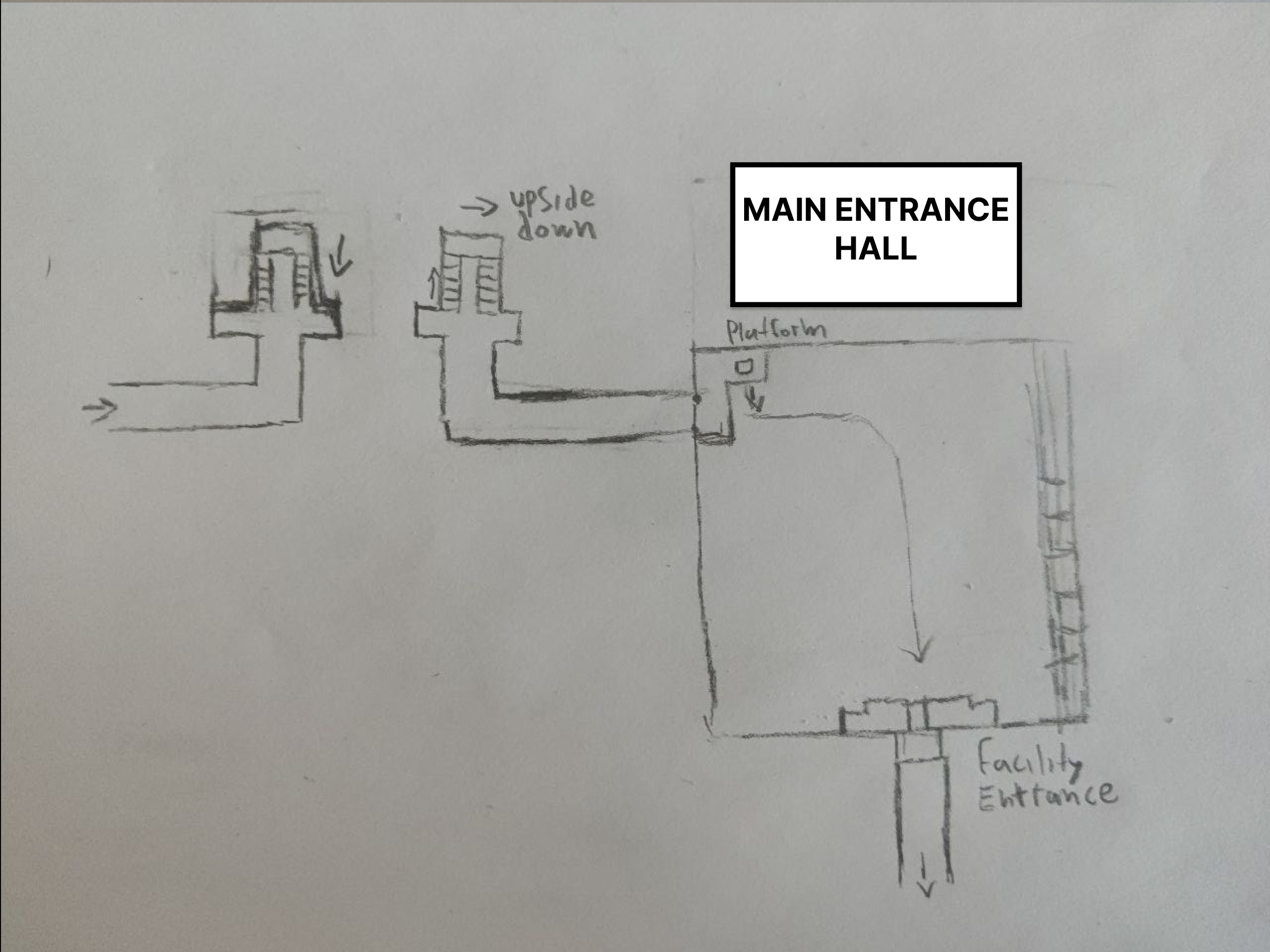
Below, I break down each room in this order and explain what I built, what changed during development, and how each space supports the final experience.
The Corridor — Part 1
After experimenting with basic blocks, I built my first real space: a corridor / path.
This room was not meant to be final content.Its main purpose was to help me:
•Learn Unreal Engine tools and workflow
•Understand scale and camera feeling
•Test how the player moves through a space I designedAt this stage, I focused on simple brutalist shapes and a forced route.
I also started working on a round corridor shape to explore a more interesting flow.
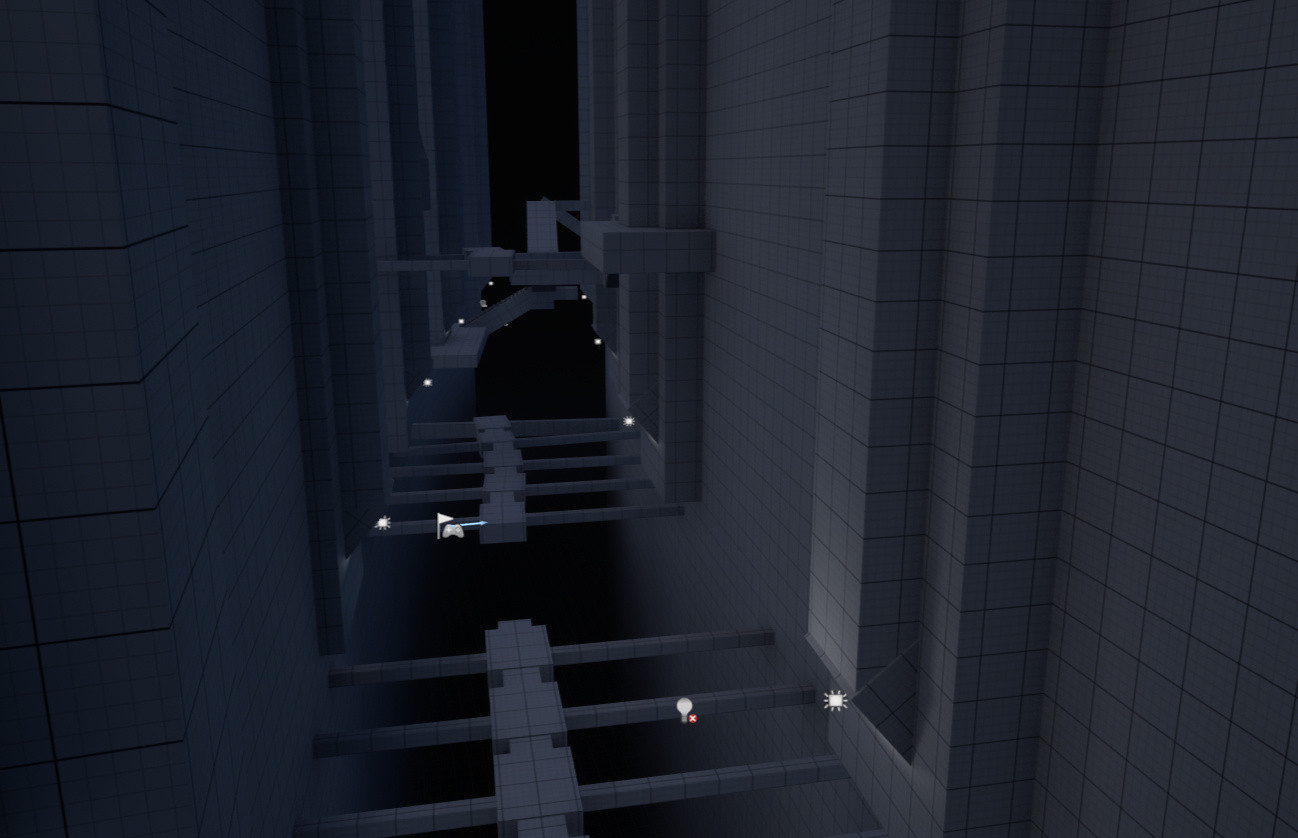
The Corridor — Part 2
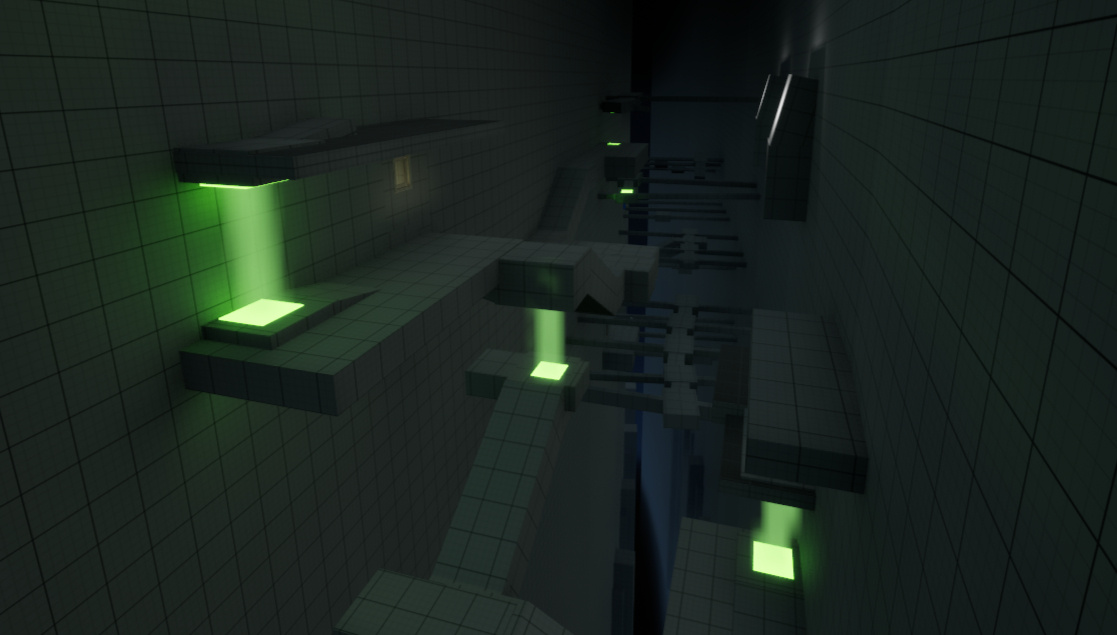
Once I began experimenting with gravity, I came back to the corridor and reworked it.The corridor was still the same “path,” but gravity allowed something new:
the player could experience the exact same space from a completely different perspective like revealing a new way to read the same space.This is when the corridor stopped being only a learning blockout and became a real design tool for:•Testing how readable the space is when the player is rotated•Testing comfort and camera control while flipped
shaping mood with atmosphere (I added fog during this phase)I also made small player adjustments during this stage (slower movement, debug viewing angles) to make testing the corridor easier and more controlled.
Storage Room — Part 1
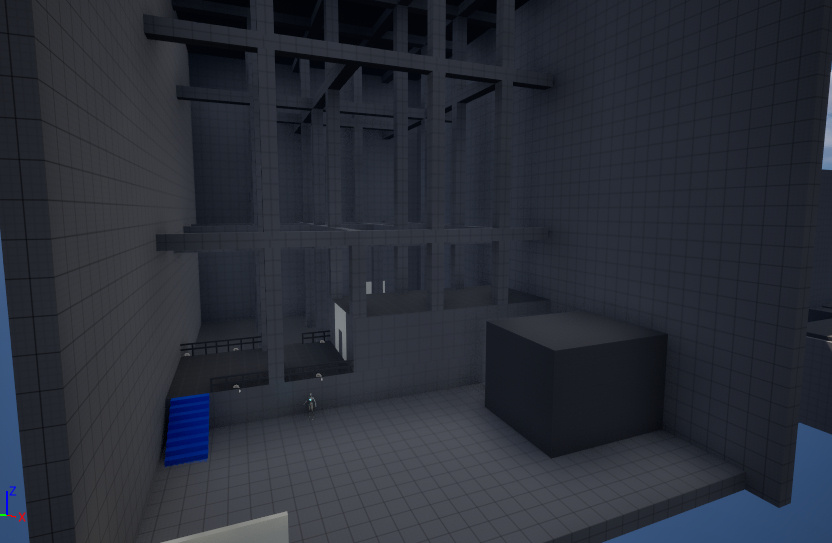
After the corridor, I built another room that felt like a storage / service area.
The main reason was simple: I wanted to test what I could do with pillars (spacing, rhythm, and visibility).Around this time, the idea for gravity manipulation started to appear.
Because of that, I reworked this room into a mirror room: two sides that are almost the same, with small differences to help orientation and make the space readable.
Storage Room — Part 2
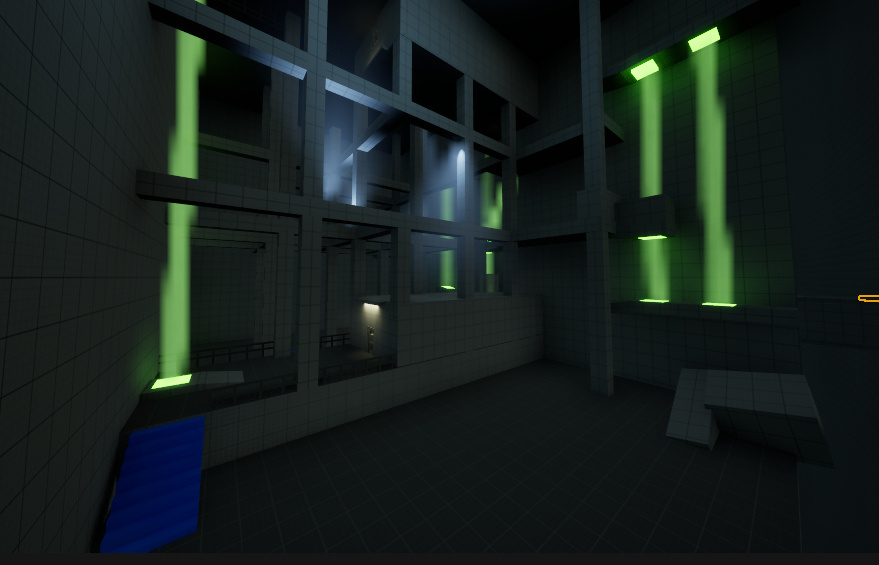
Later, I came back again and turned the room into a small puzzle space.I “destroyed” the room — as if there was an explosion.
Parts of the path are blocked, and the player must move through ruins and debris to progress.The goal is to find a way through the broken space and destroy gravity switch plates that are blocking the route.
Gravity Control Room
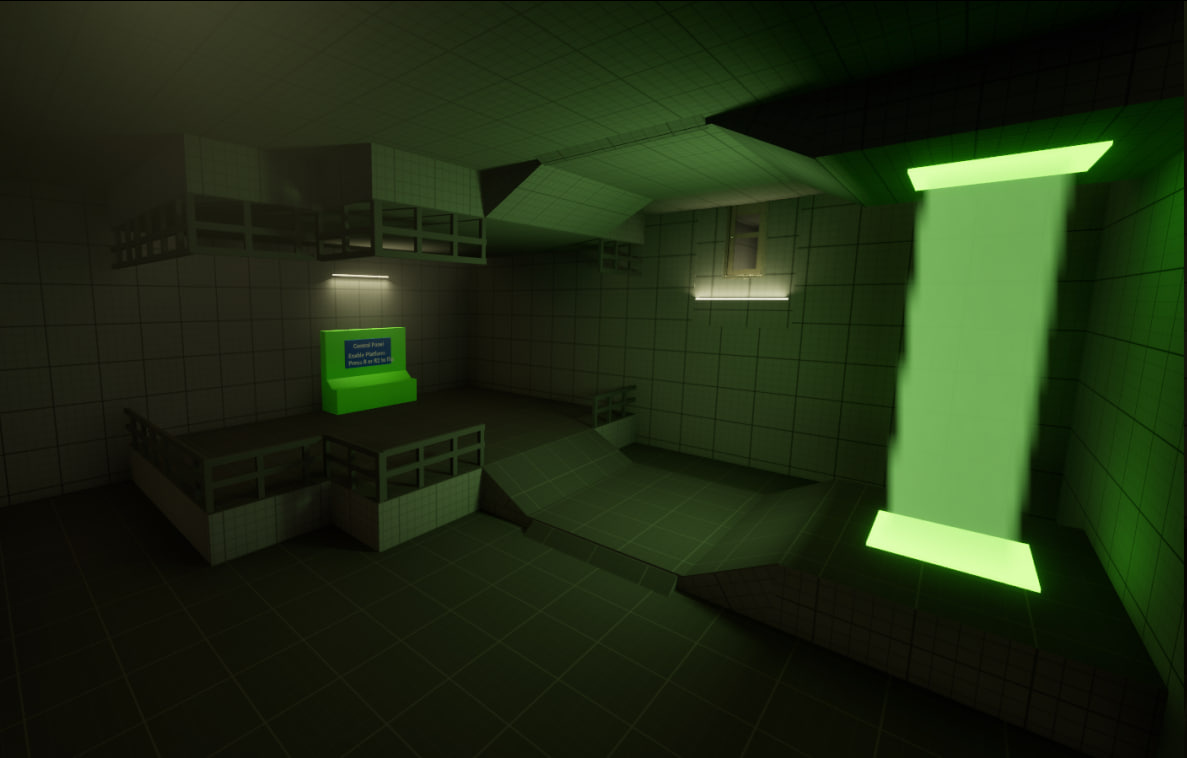
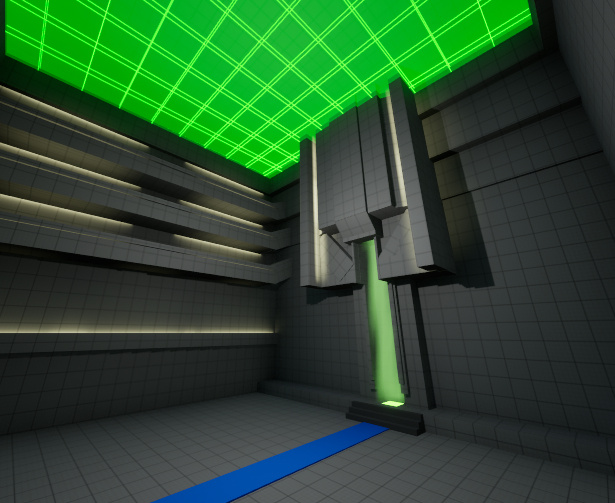
This space is the entrance of the facility, the first moment where the player feels like they are crossing into a controlled place.I designed it to work like a gate / checkpoint.
It’s a small control area that sets the tone and creates a clear “you are allowed to pass” moment before moving to the other side.The bright green elements act as guidance and focus, pulling the player toward the interaction point and reinforcing that this area exists to control traversal and lead into the next section.
Main Entrance Hall
After the first gravity flip, I wanted the player to see something with big reveal, a clear “oh wow, this is where I’m going” moment.
My goal during the whole project was to make the player feel like they are discovering parts of a massive facility, sometimes small spaces and sometimes large reveals like this. That contrast helps sell the scale, similar to how Portal uses big industrial rooms to make the world feel huge.This room is the main entrance hall: a central elevator shaft with a “carpet” path leading to it, plus balconies and side platforms that create depth and show multiple layers of space. The layout suggests this place used to be active, like it was once full of people working here.
— Normal Office
— Upside Down Office
For the final important room, I wanted a different kind of atmosphere. I got curious about minimal spaces and backrooms-like offices, and I liked the idea that a huge facility would still need normal rooms — places for paperwork, routines, and workers.
That’s why I use a similar office twice in the experience:•First time (early):
It feels like a normal, quiet office space, simple and believable.•Second time (later):
You return to a similar office after reaching the main entrance hall, but now it works as two spaces in one because of gravity. The same room is active on both orientations, with entrances that can connect to both sides.
This creates a stronger reveal like everything before the main entrance hall starts to feel like a front, and this office is the first place that clearly suggests the facility is much deeper and more hidden than it looked at the start.
Core Mechanic Design
Vertigo is built around one simple question:
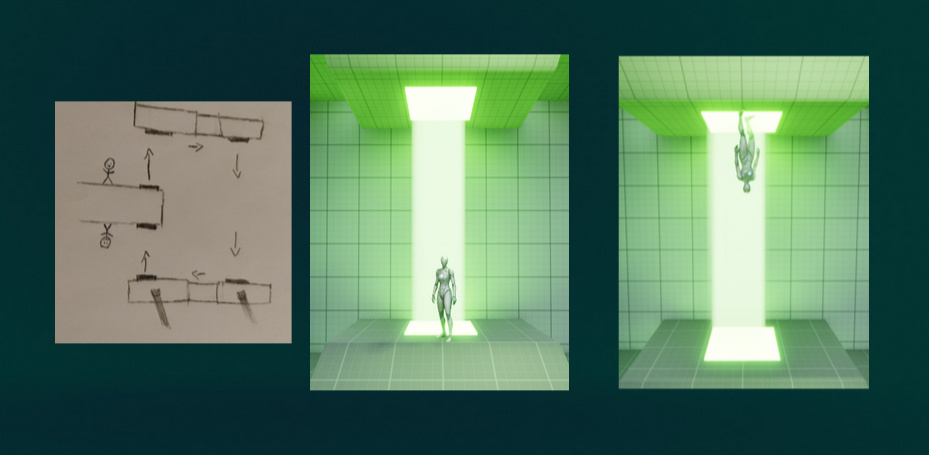
What happens when the same space becomes playable from two directions?The goal was not to make a puzzle game, but to make linear exploration feel unfamiliar. Gravity flipping lets the player
re-read the environment, notice new routes, and feel the scale of the facility in a stronger way.
The gravity flip is a traversal feature that lets the player switch orientation and walk on the opposite surface. It turns one room into two usable spaces, and it creates reveal moments where the player recognizes a location from a completely new angle.To keep it readable, I used clear “flip points” with strong visual language (bright light / high contrast) so the player always understands:•Where flipping is possible
•What side they are going to
•And what path becomes available after the flip
Takeaways
This project taught me a lot about how space and mechanics depend on each other. I started Vertigo mainly to learn Unreal and build an eerie environment, but once gravity flipping worked, the entire project changed. I couldn’t design rooms the same way anymore, every corridor and doorway had to be readable from two orientations, and I had to think more about what the player understands instantly, not just what looks cool.I also realized how much I enjoy designing through architecture first. Brutalist shapes, scale, emptiness, and lighting can create emotion without any story or characters. That part felt natural to me. The hard part was making the experience clear when gravity enters the picture. The project improved the most when I stopped trying to make flipping “everywhere” and instead treated it like a controlled tool with clear points and strong visual language.Finally, Vertigo reminded me that finishing is part of the design. Near the end, I had to sit down and force the rooms into a clean order that actually makes sense as a journey. The result is not a perfect game, but it is a complete experience that shows what I care about: mood, scale, and traversal that makes familiar spaces feel unfamiliar.